

Visionary Leadership
Ramez Al Khayyat is a Qatari entrepreneur and business leader based in Doha. As President and Group CEO of Power International Holding (PIH) and its subsidiaries, he drives the group's expansion by aligning strategic planning with operational excellence and execution.
Ramez earned his degree in Business from the University of the West of Scotland, gaining a solid grounding in international trade and strategy. In 2011, he co-founded Power International Holding with his brothers, Moutaz and Mohammad Al-Khayyat, starting with the establishment of UCC—laying the foundation for what would become a globally diversified group.
His proactive approach and strategic acumen have transformed PIH from its initial contracting roots into a robust, diversified international conglomerate. Today, PIH successfully operates across sectors such as energy concessions, construction, agriculture, real estate, hospitality, healthcare, and telecommunications.
 Connect on LinkedIn
Business Portfolio
A diversified ecosystem of companies transforming industries across energy, concessions & construction, agriculture, healthcare, telecommunications, real estate, hospitality & lifestyle.




UCC Holding
UCC Holding #41 globally in construction with over 1,200 completed projects across 24 countries, specializing in infrastructure, commercial, and residential developments .


Estithmar Holding
A publicly listed company comprising 66 subsidiaries across healthcare, hospitality, and services sectors.
Managing major tourism assets and healthcare facilities.

BALADNA

Assets Group

TMT Online

Aura Group
Press & Recognition
Featured in global media, and recognized for business leadership and industry innovation.

 Bloomberg
Ramez Al-Khayyat interview on Bloomberg Daybreak Middle East
Ramez Al-Khayyat was interviewed by Bloomberg News "Bloomberg Daybreak: Middle East" on the publication of Baladna’s financial results for the first half of FY22.
Ramez spoke of the Company’s strong efficiencies, its people and integration which contributed to a first half net profit of 86m Riyals, an increase of 19% from last year.
 August 19, 2021

 MiSK Media
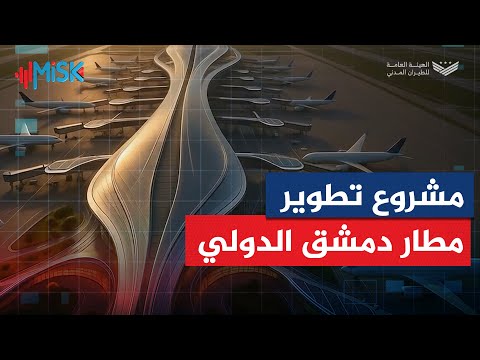
الرئيس التنفيذي لشركة UCC القابضة القطرية رامز الخياط يتحدث حول مشروع تطوير وتأهيل مطار دمشق الدولي
الرئيس التنفيذي لشركة UCC القابضة القطرية رامز الخياط يتحدث حول مشروع تطوير وتأهيل مطار دمشق الدولي
 August 06, 2025

 Forbes Middle East
Forbes Family Business Summit
Last week, Power International Holding Vice Chairman Ramez Al-Khayyat took part in the Forbes Middle East Family Business Summit. The title of the panel was Looking Ahead – The Next Decade for Family Businesses. Along with Abdullah Alkhorayef, Chief Executive Officer and Board Member of Alkhorayef Group, the panellists discussed lessons learnt in the pandemic; the way forward for expansion and growth in the future highlighting the corporate governance significance and bracing for Globalization and digitalization in the new age.
Al-Khayyat highlighted how Power International Holding has done one of the biggest and most diversified digital transformation to provide a single source of truth which will eventually deliver quality data leading to quality decisions.
#qatar #doha #pih #familybusiness #digital #Investing #Startups #Venture #technology #Forbesmiddleeast #Forbesmiddleeastevents #Forbes
August 22, 2021

 Silkway Qazaqstan
Qatari PIH set to finalise Tele2 acquisition by end of 2024 | Silk way TV news
Qatari PIH set to finalise Tele2 acquisition by end of 2024 As Ramez Al-Khayyat, President and Group CEO of PIH, noted, the company also plans to increase Kazakhstan's GDP by 2% starting in 2025. In the future, PIH will invest 18 billion dollars in projects in healthcare and agriculture.
 November 12, 2024
 alekhbariya Syria
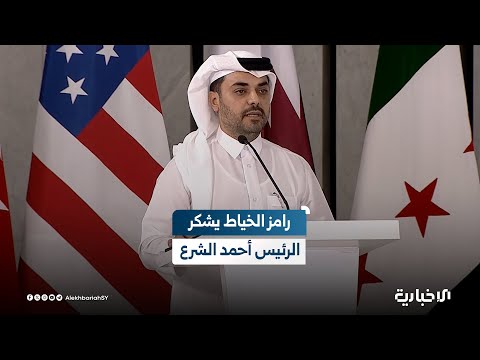
رامز الخياط يشكر السيد الرئيس أحمد الشرع وأمير قطر وترامب على دعم اتفاق الطاقة
رامز الخياط يشكر السيد الرئيس أحمد الشرع وأمير قطر وترامب على دعم اتفاق الطاقة
May 29, 2025
 MiSK Media
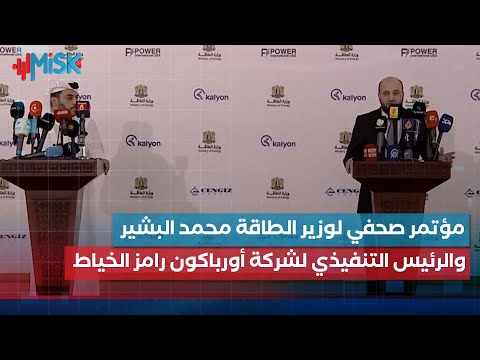
مؤتمر صحفي لوزير الطاقة محمد البشير والرئيس التنفيذي لشركة أورباكون رامز الخياط
مؤتمر صحفي لوزير الطاقة محمد البشير والرئيس التنفيذي لشركة أورباكون رامز الخياط
May 30, 2025
 alekhbariya Syria
رامز الخياط: مايتم إبرامه اليوم بداية تنفيذ مشروع وطني استثنائي باستثمار أجنبي
رامز الخياط: مايتم إبرامه اليوم بداية تنفيذ مشروع وطني استثنائي باستثمار أجنبي
#الإخبارية_السورية #سوريا #سوريا_الآن #أخبار_سوريا #عاجل #دمشق #حلب #إدلب #اللاذقية #دير_الزور #الرقة #الحسكة #درعا #السويداء #ريف_دمشق #طرطوس #حمص #حماة #القنيطرة
May 29, 2025
 Welat العربية
الرئيس التنفيذي لشركة UCC القطرية رامز الخياط يكشف آليات تطوير وتأهيل مطار دمشق الدولي
الرئيس التنفيذي لشركة UCC القطرية رامز الخياط يكشف آليات تطوير وتأهيل مطار دمشق الدولي
August 06, 2025
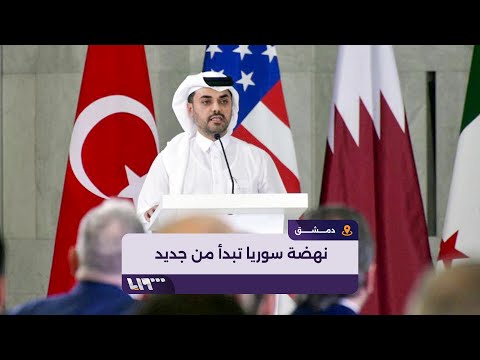
 Syria TV
مشروع إعادة الإعمار سيوفر 300 ألف فرصة عمل
مشروع إعادة الإعمار سيوفر 300 ألف فرصة عمل
May 29, 2025
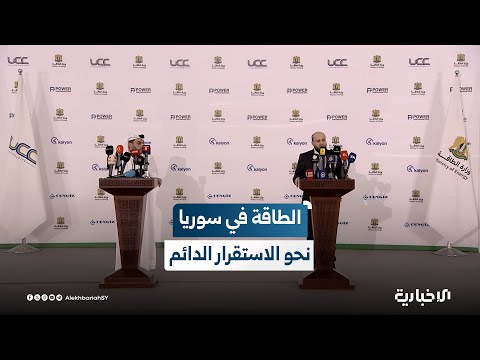 alekhbariya Syria
مؤتمر صحفي لوزير الطاقة محمد البشير والرئيس التنفيذي لشركة أورباكون رامز الخياط
مؤتمر صحفي لوزير الطاقة محمد البشير والرئيس التنفيذي لشركة أورباكون رامز الخياط
الإخبارية السورية، هي القناة الرسمية للجمهورية العربية السورية، انطلقت ببثها التجريبي في 5 أيار 2025، لتكون الصوت الأوّل في الإعلام الحكومي، للوصول إلى الخبر الموثوق بمهنية وموضوعية.
May 29, 2025
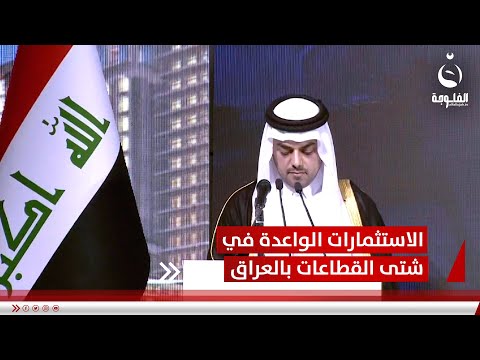
 Al Fallouja TV
الخياط: نحتفل اليوم بانطلاق الاستثمارات الواعدة في شتى القطاعات بالعراق
الخياط: نحتفل اليوم بانطلاق الاستثمارات الواعدة في شتى القطاعات بالعراق
August 25, 2023

Syria Signs USD 4 Billion Foreign Investment Agreement with Qatari UCC Holding‑Led Consortium to Redevelop Damascus International Airport

WORLD’S LARGEST 3D PRINTED CONSTRUCTION PROJECT COMMENCES IN QATAR. UCC Holding and Ashghal Launch the 3D-Printed Schools Project

UCC Holding ranked #1 on Construction Week’s 2025 Power 150 list of the top contractors.
Our goal is to improve quality of life in the communities we operate in.” Moutaz Al-Khayyat, Chairman of Power International Holding (PIH), shares his investment vision with Arabian Business.
Redevelop Damascus International Airport

Under the patronage of His Excellency President Ahmad Al-Sharaa, President of the Syrian Arab Republic, Syria has signed a memorandum of understanding worth more than US$4 billion in foreign investment with a five-company consortium headed by Qatar’s UCC Holding to redevelop and expand Damascus International Airport,
The project represents a cornerstone of the nation’s reconstruction initiatives, aimed at enhancing global connectivity and contributing to the growth of the economy, trade, and tourism. It is considered a pivotal milestone in a series of major developments implemented in vital sectors such as energy, reconstruction, and infrastructure. This investment is one of the largest in Syria’s infrastructure in decades, reflecting the country’s drive to restore its regional and international position and restoring its place on regional air routes. This project forms part of a package of strategic initiatives directed by His Highness Sheikh Tamim bin Hamad Al Thani, the Amir of the State of Qatar, with the aim of supporting Syria’s economic recovery and fostering a long-term partnership between the State of Qatar and the Syrian Arab Republic.
The consortium – UCC Concessions Investments LLC (Qatar), Assets Investments USA LLC (United States), Cengiz İnşaat, Kalyon İnşaat and TAV Tepe Akfen (all Turkey) – will run the build-operate-transfer venture in five stages, to reach an annual capacity of 31 million passengers
The signing ceremony took place in Damascus in the presence of Mr. Tom Barrack, the U.S. Special Envoy to Syria, representatives of the Qatari Embassy in Syria, senior official delegations, and a number of diplomats. The agreement was signed by Mr. Omar Al-Husari, Chairman of the General Authority of Civil Aviation – representing the Government of the Syrian Arab Republic – along with Mr. Mohammad Moataz Al-Khayyat, Chairman of UCC Holding; Mr. Sani Şener, Chairman of TAV; Mr. Anthony Salter, CEO of Assets Investments USA; Mr. Murat Ergonul, Board Member of Cengiz İnşaat; and Mr. Murathan Kalyoncu, Chairman of Kalyon İnşaat.
The project will be executed in five successive phases: increasing capacity to 6 million passengers in the first year, 16 million upon completion of the second phase, and ultimately reaching 31 million passengers annually at full capacity. The airport will be built to the highest international standards approved by the International Civil Aviation Organization (ICAO) and the International Air Transport Association (IATA), featuring up to 32 gates equipped with modern passenger boarding bridges, a fully integrated air navigation service system, and a world-class duty-free area housing a wide selection of international restaurants, upscale cafés, and leading fashion brands—making it one of the most modern and advanced airports in the region.
The project also includes the development of the main access road to the airport, stretching up to 50 km, in addition to USD 250 million in financing to purchase up to 10 Airbus A320 aircraft for Syrian Airlines, aimed at enhancing the fleet and increasing the competitiveness of the national carrier.
Mr. Mohammad Moutaz Al-Khayyat, Chairman of UCC Holding, stated:
“This project embodies the outcome of a strategic partnership bringing together a select group of leading international companies with a unified goal: rebuilding one of Syria’s most vital facilities in a way that reflects its future ambitions. At UCC Holding, we believe that the success of projects of this magnitude requires the integration of global expertise with a deep understanding of local market needs—a principle we aim to apply in every stage of implementation. We also wish to express our appreciation to His Highness Sheikh Tamim bin Hamad Al Thani, Amir of the State of Qatar, for his unwavering support and guidance in enabling the Qatari private sector to contribute to building a new Syria and to undertake strategic projects that bolster the Syrian economy.”
Mr. Ramez Al-Khayyat, President and Group CEO of UCC Holding, said:
“This project is not just about redeveloping Damascus International Airport; it is a strategic bridge carrying Syria toward a future of recovery and prosperity. We are investing in a sustainable development vision that enhances trade and tourism, connects Syria to the world at the highest standards, and stimulates economic growth and investment across all sectors. Leveraging Syria’s strategic location and our extensive local and regional partnerships, Damascus International Airport will become a model for advanced, smart transportation projects in the region.”
Mr. Sani Şener, Chairman of TAV, commented:
“We view this project as a strategic investment opportunity that goes beyond infrastructure development. It is a gateway to revitalizing the Syrian economy and reintegrating it into regional and global trade and investment flows. We bring to this investment our accumulated expertise in developing and operating major transportation projects to deliver a world-class airport that enhances the efficiency of the aviation sector, boosts the attractiveness of the Syrian market to global capital, and paves the way for a new era of growth and stability.”
It is worth mentioning that UCC Holding has previously worked on the development and execution of several landmark airports, including Hamad International Airport in Qatar, Rwanda International Airport, and Tripoli Airport in Libya, and now adds Damascus International Airport to its portfolio of major strategic projects in the region.
The U.S. and Turkish consortium partners also have extensive experience in developing and operating major airports worldwide, having contributed to landmark projects such as Istanbul New Airport—the largest airport project in the world today—delivered through the İGA consortium led by Kalyon and Cengiz, as well as Ordu–Giresun Airport and Rize–Artvin Airport in Turkey, Istanbul Atatürk Airport, Ankara Esenboğa Airport, Gazipaşa–Alanya Airport, Prince Mohammad bin Abdulaziz International Airport in Medina, King Khalid International Airport – Terminal 5 in Riyadh, Tbilisi International Airport and Batumi International Airport in Georgia, Enfidha–Hammamet Airport in Tunisia, Skopje and Ohrid Airports in North Macedonia, and the Terminal 3 expansion at Cairo International Airport in Egypt.
The project is expected to create more than 90,000 direct and indirect jobs, strengthen the local economy across multiple sectors, and enable Syria to return as an active player in the regional and international aviation network, becoming a leading strategic hub in the region.
UCC Holding and Ashghal Launch the 3D-Printed Schools Project

In a global first for large-scale digital construction, UCC Holding, in partnership with the Public Works Authority (Ashghal), has officially commenced the printing phase of the 3D Printed Schools Project—marking the launch of the world’s largest construction development using 3D printing technology.
The project involves the construction of 14 public schools, including two built using 3D printing technology, each with a built-up area of 20,000 square meters — totaling 40,000 square meters. This is 40 times larger than the largest 3D-printed building constructed anywhere in the world to date. The two schools are designed as two-storey buildings on plots measuring 100 by 100 meters each, making this project an unprecedented model for future-ready educational infrastructure in Qatar and across the region.
To realize this unprecedented scale, UCC Holding commissioned COBOD, the world leader in 3D construction printing based in Denmark, to supply two customized BODXL printers, each measuring 50 meters long, 30 meters wide, and 15 meters high—roughly the size of a Boeing 737 hangar—making them the largest construction printers in the world.
Following extensive preparation—including site development, equipment assembly, and operational simulations—printing operations have officially begun. UCC Holding has assembled a dedicated 3D construction team consisting of architects, civil engineers, material scientists, and printer technicians. Over the past eight months, this team conducted over 100 full-scale test prints using a BOD2 printer at a dedicated trial site in Doha, developing concrete mix designs, validating performance under local climate conditions, and engineering a custom print nozzle to ensure precision and smooth extrusion.
In May 2025, the team completed intensive training alongside COBOD engineers, covering printer operation, print sequencing, structural layering strategies, and live quality control. This milestone marks a major leap in Qatar’s local capacity for advanced construction technology, solidifying its role as a regional hub for innovation and engineering.
Compared to conventional construction methods, 3D printing offers multiple environmental, social, and economic advantages. It significantly reduces raw material waste and minimizes concrete usage, cutting carbon emissions. On-site printing also reduces transport needs, mitigates supply chain risks, and accelerates project delivery. With operations scheduled at night to avoid high temperatures, the process also ensures better concrete performance while reducing dust and noise.
Architecturally, the schools are inspired by the natural desert formations of Qatar, with curved, flowing walls resembling sand dunes. This design is only made possible by the geometric freedom that 3D printing offers—enabling organic, parametric forms that would be difficult or cost-prohibitive using traditional construction methods.
The schools are expected to be completed by the end of 2025, reinforcing Qatar’s global leadership in sustainable development, innovation, and next-generation public infrastructure.
UCC Holding ranked #1 on Construction Week’s 2025 Power 150 list of the top contractors.

UCC Holding has marked a milestone year that firmly positions it as a global player in energy, concessions and infrastructure in 19 countries. In May 2025, a UCC Holding-led consortium signed a memorandum of understanding with the Syrian government to launch the $7 billion Syria Power Revival Initiative, aimed at developing large-scale power generation projects with foreign investment. The consortium led by UCC includes Power International USA, Kalyon GES Enerji and Cengiz Enerji from Turkey. The agreement involves building four combined-cycle gas turbine power plants with a total capacity of 4,000 megawatts, plus a 1,000MW solar power plant in southern Syria.
Throughout the year, UCC Holding has undertaken megaprojects in Saudi Arabia and expanded its portfolio into several new countries.
Lately, UCC secured major contracts across the Middle East, Africa and the Americas. Notably, multiple projects in Qiddiya, the entertainment and tourism megaproject and Diriyah, the heritage hospitality landmark project in Saudi Arabia. In Guyana, UCC Holding is working on projects in power generation and resort hospitality, making the company a key partner in the country’s economic growth. In Kazakhstan, UCC has pipeline projects and other gas processing and power plants underway.
Moreover, the company has pushed the boundaries of construction innovation. In Qatar, it’s building the country’s first 3D-printed schools with the world’s largest 3D printer, testing Digital Twins, and using standardised BIM to cut clashes and rework by 20%. On the sustainability front, LEED Gold certifications, 35% site waste reduction and ESG-aligned procurement policies highlight UCC Holding’s focus on responsible building.
“UCC Holding is shaping the future with transformative investments, as our growing global presence reflects trust in our success, efficiency and agility
Our goal is to improve quality of life in the communities we operate in.” Moutaz Al-Khayyat, Chairman of Power International Holding (PIH), shares his investment vision with Arabian Business.

“Our goal is to improve quality of life in the communities we operate in.”
Moutaz Al-Khayyat, Chairman of Power International Holding (PIH), shares his investment vision with Arabian Business.
What is your long-term vision for Power International Holding, and how do you see it evolving over the next decade?
Power International Holding is a key economic and development driver in the region, enhancing integration among our six groups—UCC Holding, Estithmar Holding, Baladna, Assets Group, Aura Group, and TMT—while expanding our global footprint, especially in vital sectors such as energy, healthcare, food industries, contracting, services, and world-class tourism destination development.
Our clear strategy is to contribute to improving the quality of life in the communities where we operate. Our long-term vision stems from the principle of “Building a brighter future from Qatar to the world.” We believe true growth is not just in numbers and projects, but in the lasting, positive impact we leave on every sector and community we serve.
Recently, UCC Holding—one of our core groups—signed an agreement with the Syrian government to lead a consortium of international companies, including Power International USA and Turkey’s Kalyon Energy and Cengiz Energy, to develop major power projects in Syria. This foreign investment, valued at around USD 7 billion, includes the development of four gas turbine power plants across Syria with a combined capacity of 4,000 MW, and a 1,000 MW solar power plant—effectively rebuilding Syria’s power infrastructure. For us, projects like this are not just milestones in our business growth, but a reflection of our values and strategic goals to create real societal and economic impact.
What strategic principle guides your investment decisions or entry into new sectors?
We invest in growing sectors that are in increasing demand globally and particularly in the regions where we operate. For example, our investments in energy focus on countries recovering from crises that urgently need to rebuild their core systems, and our healthcare investments align with the remarkable development in the region’s healthcare sector. This pattern is consistent across our investments—and it has proven successful, becoming one of our guiding principles.
We assess any new opportunity based on three criteria: its societal impact, its alignment with our values and vision, and our ability to excel in it regionally or globally. That’s why our sector entries are always calculated, based on a deep understanding of local, regional, and global contexts.
What was the key turning point that radically changed the group’s trajectory?
The most pivotal moment was in 2020 when we decided to expand regionally and internationally. We based this move on our success record in Qatar and our experience in contracting, food industries, healthcare, tourism development, and more. This allowed us to gain trust and export Qatari expertise regionally and globally. The expansion required a full operational restructure, the formation of multinational specialist teams, digital transformation, and governance systems capable of supporting scale.
Most importantly, it gave us a broader perspective on our business model. For example, UCC started as a trusted contracting firm and is now one of the world’s leading energy and construction players. Assets Group, once focused on managing hotels and resorts, is now developing some of the most luxurious global destinations in partnership with top-tier hospitality brands. Baladna, which helped Qatar achieve self-sufficiency in dairy, is now globally recognized for helping countries secure milk supply, currently expanding its model to Algeria with a USD 3.5 billion investment.
Today, our operations span 19 countries, with about 65,000 employees. We were recently ranked 10th among the top Arab family businesses by Forbes, and UCC was ranked 42nd globally in construction and 10th in energy by ENR.
How do you personally define “social contribution,” especially considering PIH’s presence across multiple countries?
Social contribution is a core parallel track to our business—not just philanthropy. Most of our projects directly transform the lives of surrounding communities by creating local jobs, empowering talents, and strengthening supply chains. They also directly improve quality of life through infrastructure, energy, healthcare, tourism, and hospitality.
In addition, we consistently support local and regional community initiatives—whether sports, cultural, or humanitarian. This stems from our belief in our duty as a national company and as a partner to the communities we serve globally.
How do you view the future of the healthcare sector in light of your investments in this vital area?
Healthcare continues to grow, with the private sector becoming a crucial partner. Two key trends drive this: reducing government healthcare spending (which can exceed 14% of GDP in some countries like Qatar), and the need to upgrade healthcare services in many nations, with the private sector bringing the required resources and expertise. This creates a win-win model.
Estithmar Holding, one of our groups, includes over 2,500 medical professionals and 9 hospitals across Qatar, Algeria, Iraq, and Libya—ranging from full ownership to operational management. We’re expanding to reach 5,000 beds by 2026 and are actively preparing for further regional and global expansion.
What trends do you think will shape the hospitality guest experience in the coming years?
Globally, hospitality is shifting toward branded residences—luxury apartments in globally recognized hotel brands. This segment has grown at a CAGR of 11% over the past four years, and it continues to grow. In Asia alone, the branded residences market was valued at USD 26.6 billion in 2024, with over 68,000 luxury units.
Overall, luxury is thriving across sectors—real estate, hospitality, and entertainment. It has proven resilient against global shocks like COVID-19 and wars. Targeting the high-end market is now the dominant trend.
Equally important are sustainability and creating authentic cultural experiences. Our own experience managing 14 hotels and resorts—such as Waldorf Astoria Maldives, our Qatar-based portfolio, the upcoming Rixos Baghdad Residences, and Rosewood Maldives—shows us how fast expectations are evolving. Strong competition and emerging tourist destinations require constant innovation.
How is PIH adapting to digital transformation and AI, especially given its presence in healthcare and real estate?
Digital transformation is part of our daily culture. We invest in AI to enhance efficiency and create more human-centric experiences. We’ve already undergone a full digital transformation across all companies, integrating digital tools into every sector—working with giants like SAP, Google, and Microsoft.
Internally, we’ve also developed custom platforms and applications, all embedded with AI capabilities. In healthcare, we use AI for diagnosis and operations. In real estate, we rely on smart platforms for asset performance and maintenance. In agriculture, we use AI to monitor supply chains and boost farm productivity. For us, technology is not a replacement for humans—it’s a way to empower them.
What role do you see PIH playing in the next 5–10 years beyond economic diversification?
I aspire for PIH to be a model of both economic and social responsibility. In the coming years, we aim to help build more resilient, self-reliant economies. This includes projects like Baladna for food security, and further expansion in energy, healthcare, telecommunications, real estate, and luxury tourism.
We’ll continue to scale up our public-private partnership (PPP) model, especially given its success in Iraq, Libya, Kazakhstan, and others. We don’t see ourselves as mere developers or operators—we aim to be catalysts for stronger communities, empowered individuals, and a more sustainable planet.
How does PIH stay at the forefront of innovation rather than merely adopting trends?
We start where others stop—adopting global best practices and adapting them to our unique project environments. For instance, in healthcare, we partner with global leaders like Cedars-Sinai (USA) and Asan (Korea), bringing the latest medical tech and the world’s best medical professionals. But more than that, we design care experiences that center on the human being.
In construction, we’ve partnered with COBOD, the global leader in 3D construction printing. We’re currently using the world’s largest 3D printer to build schools in Qatar. This innovation-first mindset helps us lead in every sector we work in.
We also foster a culture of out-of-the-box thinking, experimentation, and fast decision-making. Dedicated teams monitor global trends and translate them into practical opportunities. Our agile operating models allow rapid action—whether launching new projects or adjusting strategies. Innovation, for us, comes from all levels, not just top leadership. That’s why we encourage internal knowledge exchange across all our groups.
How does PIH address ESG (Environmental, Social, Governance) issues in sectors like agriculture and energy?
We treat ESG as a core strategy, not a compliance checkbox. PIH, Estithmar Holding, and Baladna have all adopted the UN Sustainable Development Goals (SDGs), embedding the 17 goals—including gender equality, climate action, and environmental protection—into our operations.
In agriculture, we offer end-to-end solutions that ensure efficient resource use and protect local ecosystems. At Baladna farms and factories, we use advanced technologies that cut water usage by over 50%. In energy, we invest in solar plants, water treatment, and recycling.
We follow strong governance policies built on transparency, integrity, and equal opportunity. Our teams receive ongoing ESG training, and we regularly assess our social and environmental impact.
Moreover, PIH has two publicly listed companies on the Qatar Stock Exchange—Baladna and Estithmar Holding—which reinforces our commitment to governance and capital market standards.
What advice do you have for aspiring entrepreneurs in the GCC? And how do you personally balance your professional and personal life as a business leader?
My advice is to align your ambition with a clear vision and strong values. Building a great team, fostering a healthy culture, and having a long-term strategy are essential to success. Flexibility and adaptability are crucial traits. Keep trying, overcome failure—but always learn from it. And be ready to make bold decisions others may see as risky.
As for work-life balance—it’s a constant challenge, but achievable through delegation, time management, and prioritizing what matters: family, self-growth, even moments of reflection. You can’t lead others if you’re not centered yourself.


Social Media
Stay connected and follow Ramez Al-Khayyat's latest updates, insights and activities across social media
A $7 billion investment is shaping a new future for the energy sector in the Syrian Arab Republic, led by UCC Holding
A $7 billion investment is shaping a new future for the energy sector in the Syrian Arab Republic, led by UCC Holding
A $7 billion investment is shaping a new future for the energy sector in the Syrian Arab Republic, led by UCC Holding as part of an international consortium that brings together top-tier global players and pioneers in the energy sector.
The project includes four natural gas power plants and one solar power plant, with a total capacity of up to 5,000 megawatts. It aims to address the electricity deficit, supply energy to vital sectors, and create thousands of jobs across various disciplines.
We extend our deepest thanks and appreciation to His Highness Sheikh Tamim bin Hamad Al Thani, the Amir of the State of Qatar, for his continuous support and wise guidance, which reflect His Highness’s firm commitment to advancing regional development projects, especially in the Syrian Arab Republic, and to strengthening Qatar’s role in building a more stable and prosperous future for the region.
We also express our sincere gratitude to His Excellency Ahmed Al Sharaa, President of the Syrian Arab Republic, for his sponsorship and support of this pivotal project.
We further commend the support of His Excellency, Donald Trump, President of the United States of America, who paved the way for this project through his historic decision to lift sanctions on Syria. This move clearly demonstrates a commitment to supporting stability, development, and reconstruction. We also value the participation of Mr. Tom Barrack, the U.S. Special Envoy to Syria, which reinforces this direction and reflects the seriousness of the U.S. in backing practical and effective solutions on the ground.
What we achieve today is more than just a power project — it is the embodiment of a strategic vision to build a prosperous future for Syria and the region.
The View Hospital in affiliation with Cedars Sinai, by Estithmar Holding has become the 1st hospital in Qatar to be accredited under the JCI 8th Edition
The View Hospital in affiliation with Cedars Sinai, by Estithmar Holding has become the 1st hospital in Qatar to be accredited under the JCI 8th Edition
We are proud to announce that The View Hospital in affiliation with Cedars Sinai, by Estithmar Holding has become the 1st hospital in Qatar to be accredited under the JCI 8th Edition, the most rigorous and globally recognized benchmark for healthcare quality and patient safety.
The milestone marks our firm commitment to safeguarding every patient’s wellbeing, ensuring their safety, and enhancing their experience at every step of their journey.
Thank you to our amazing teams, physicians, staff, and incredible patients who made this achievement possible.
Honored the contributors and sponsors of the HH The Amir Sword International Equestrian Festival.
Honored the contributors and sponsors of the HH The Amir Sword International Equestrian Festival.
His Excellency Sheikh Joaan bin Hamad Al Thani, President of the Qatar Olympic Committee, honored the contributors and sponsors of the HH The Amir Sword International Equestrian Festival.
Baladna was recognized as the official sponsor of the Silver Sword for 2025, with the award received by Mr. Ramez Al Khayyat, Managing Director of Baladna.